5 Costly Eviction Notice Mistakes Landlords Make (And How to Avoid Them)
Serving an eviction notice sounds simple: write it, deliver it, wait. But small errors at this stage are one of the most common reasons eviction cases get delayed or dismissed in court. If you're a landlord or property manager, here are the mistakes to watch for — and how to avoid each one.
1. Using the Wrong Notice Period for the State
Every state sets its own deadline for how long a tenant has to respond before you can file for eviction. Florida, California, and Texas require 3 days for unpaid rent. New York requires 14. Pennsylvania requires 10. Ohio requires 3.
The mistake: Landlords who manage properties in more than one state — or who copy a notice template from a generic online source — often apply the wrong timeline. A notice with an incorrect deadline can be thrown out, forcing you to start the entire waiting period over again.
How to avoid it: Always confirm the current notice period for the property's specific state (and sometimes city) before sending anything. Don't rely on a template you used last year — laws change.
2. Sending the Wrong Type of Notice
Not all eviction notices are the same. A "Notice to Pay or Quit" applies to unpaid rent. A "Notice to Cure or Quit" applies to a lease violation that can be fixed, like an unauthorized pet. A "Notice to Vacate" or "Demand for Possession" may apply when there's no opportunity to cure.
The mistake: Sending a pay-or-quit notice for a lease violation (or vice versa) is a mismatch that courts will flag, since the notice doesn't match the actual legal grounds for eviction.
How to avoid it: Identify the real reason for the eviction first, then choose the notice type that matches. If you're not sure which applies, that's worth a quick check with an attorney before sending.
3. Delivering the Notice the Wrong Way
Most states specify exactly how a notice must be delivered — in person, by mail, by posting on the door, or a combination. Some require certified mail specifically so there's a delivery record.
The mistake: Handing a notice to a roommate instead of the named tenant, texting a photo of the notice, or mailing it without any proof of delivery. If the tenant later claims they never received it, and you have no record, your case can stall.
How to avoid it: Use a delivery method your state allows, and keep documented proof — a certified mail receipt, an email delivery confirmation, or a signed acknowledgment. Don't rely on informal delivery methods even if they feel faster.
4. Missing Required Language or Disclosures
Courts expect specific wording on an eviction notice: the amount owed (if applicable), the deadline to respond, and sometimes state-specific disclosures about tenant rights.
The mistake: Using a generic template pulled from a search engine that's missing a required line for your state, or that was written for a different state entirely.
How to avoid it: Use a notice template built specifically for the property's state, and double check it against your state's current landlord-tenant statute — or a tool that keeps templates updated automatically.
5. Filing in Court Too Early
Once a notice is sent, the tenant is entitled to the full response window before you can file an eviction case — even if you're confident they won't pay or fix the issue.
The mistake: Filing in court one day too early because the notice period was miscounted (weekends and holidays are handled differently depending on the state).
How to avoid it: Track the exact deadline based on when the notice was actually delivered, not when it was written or mailed, and confirm your state's rules on counting days before filing.
The Common Thread
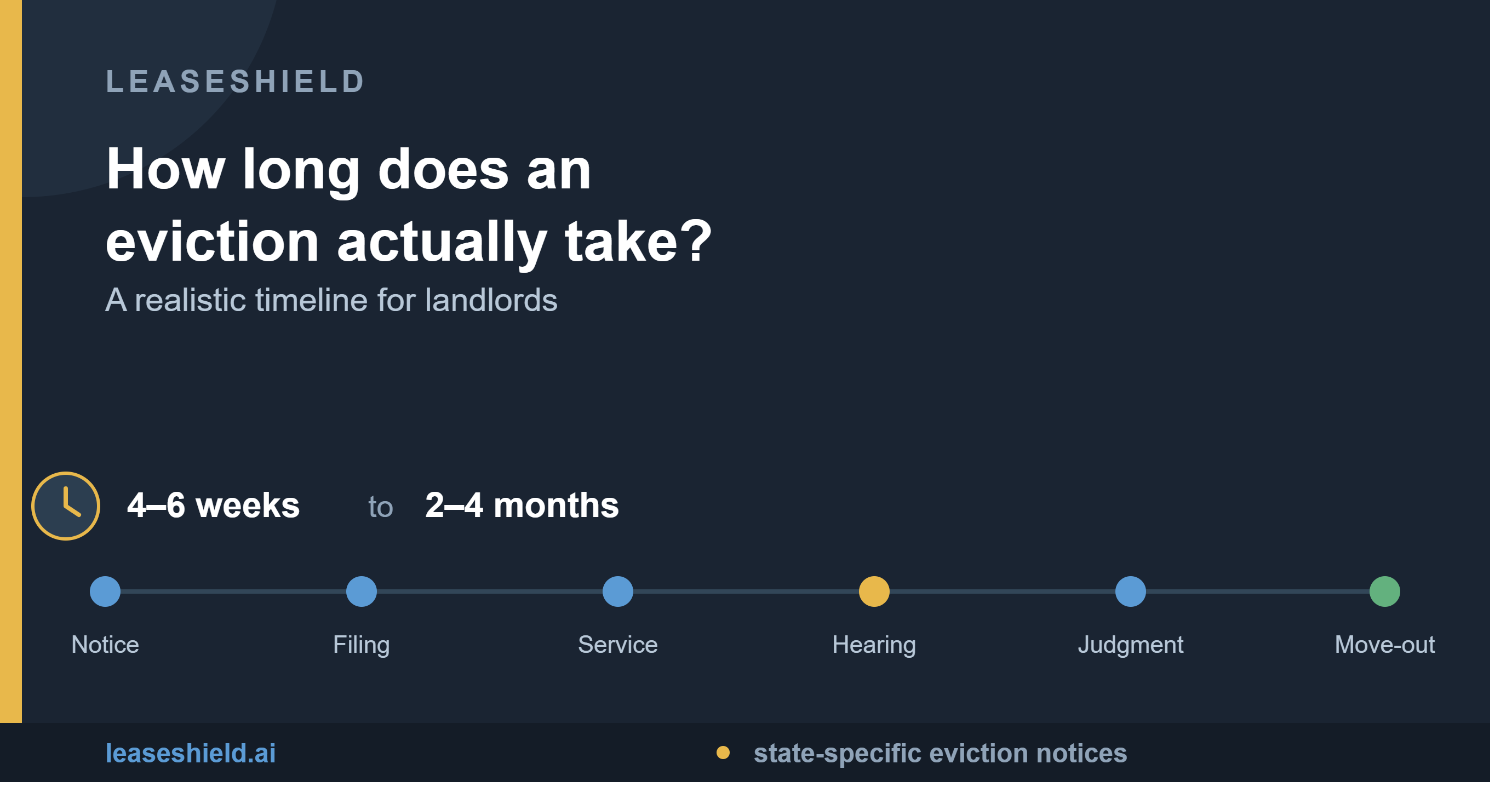
Every one of these mistakes comes down to the same root cause: eviction notice rules are detailed, state-specific, and unforgiving of small errors. A missed deadline or wrong form doesn't just create paperwork — it can add weeks to your timeline and additional legal costs.
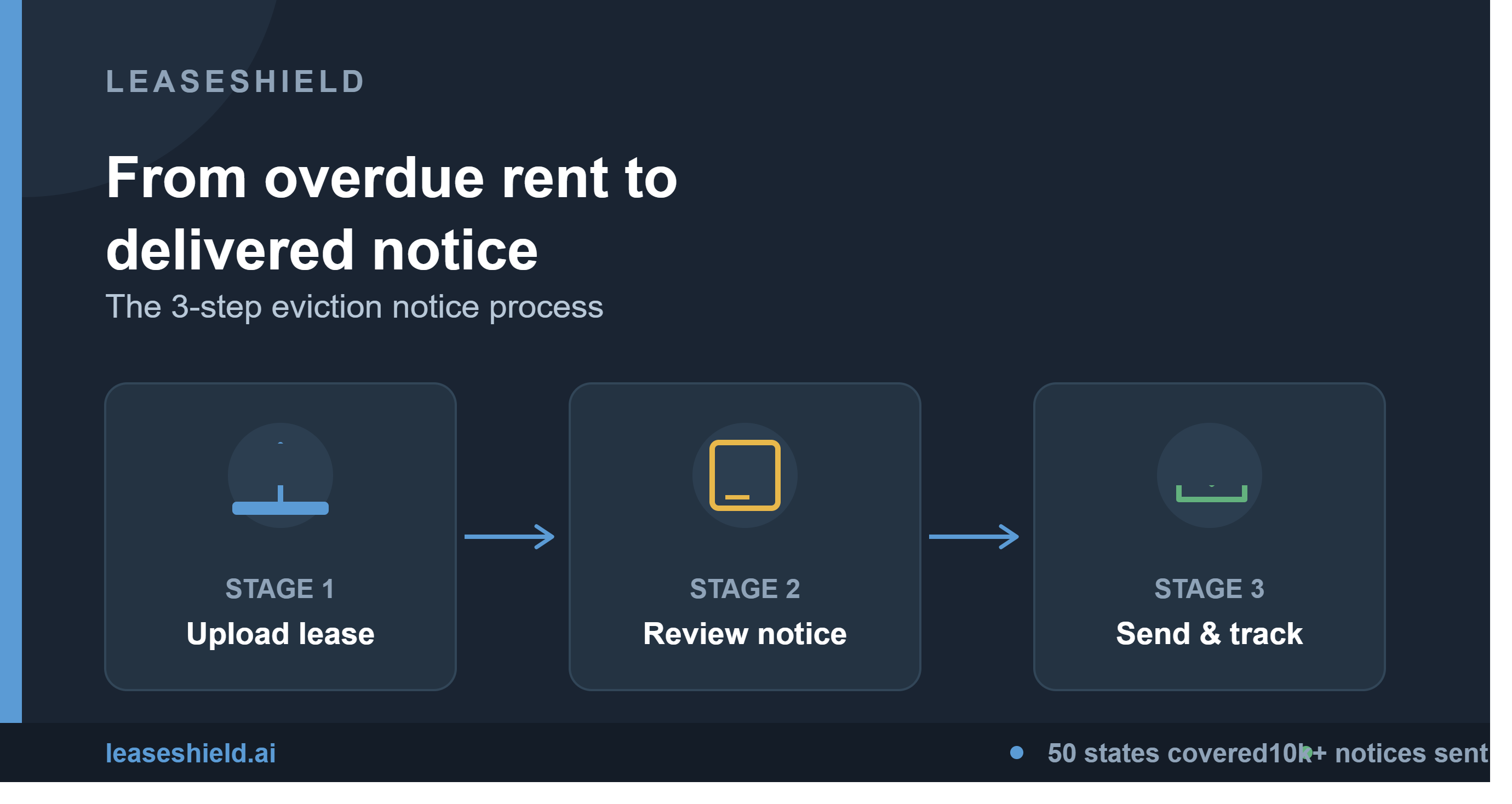
This is exactly the gap tools like LeaseShield are built to close. By generating the correct notice type and deadline based on the property's state, and tracking delivery with certified email or mail, LeaseShield removes most of these mistakes before they happen — so you can focus on resolving the situation, not second-guessing the paperwork.
This article is for general information only and isn't legal advice. Eviction laws vary by state and locality, so consult a licensed attorney for guidance on your specific situation.