How to Send a Legally Compliant Eviction Notice (Without the Guesswork)
If you're a landlord dealing with unpaid rent or a lease violation, the eviction notice is your first and most important step. Get it wrong, and you could delay the entire eviction process by weeks — or lose your case in court before it even starts. Here's what every landlord should know, and how to avoid the most common mistakes.
What Is an Eviction Notice?
An eviction notice is a written document you give a tenant before filing an eviction case in court. It tells the tenant that rent is overdue or that a lease term has been violated, and gives them a deadline to fix the issue — pay the rent, correct the violation, or move out.
Courts almost everywhere require this notice before they'll hear an eviction case. Skip it, use the wrong form, or miscalculate the deadline, and a judge can throw your case out — forcing you to start the entire notice period over again.
Why Eviction Notices Trip Landlords Up
The biggest challenge isn't understanding that you need a notice — it's getting the details right. A few examples:
- Notice periods vary by state. Florida, California, and Texas all require 3-day notices for unpaid rent, but New York requires 14 days and Pennsylvania requires 10. Use the wrong timeline and the notice is invalid.
- Notice types differ too. A "Notice to Pay or Quit" is different from a "Notice to Vacate" or a "Demand for Possession," and using the wrong one for the situation can set your case back.
- Delivery method matters. Many states have specific rules about how a notice must be delivered — in person, by mail, by posting on the property — and you often need proof it was delivered correctly.
- Formatting requirements are strict. Courts expect specific language and disclosures on the notice itself. A notice that's missing a required line can be rejected.
For a landlord managing this manually, that means researching your state's specific rules, drafting the notice correctly, delivering it in a way that holds up in court, and keeping records — all before the eviction case can even begin.
How LeaseShield Simplifies the Process
LeaseShield was built to take the guesswork out of this first step. Here's how it works:
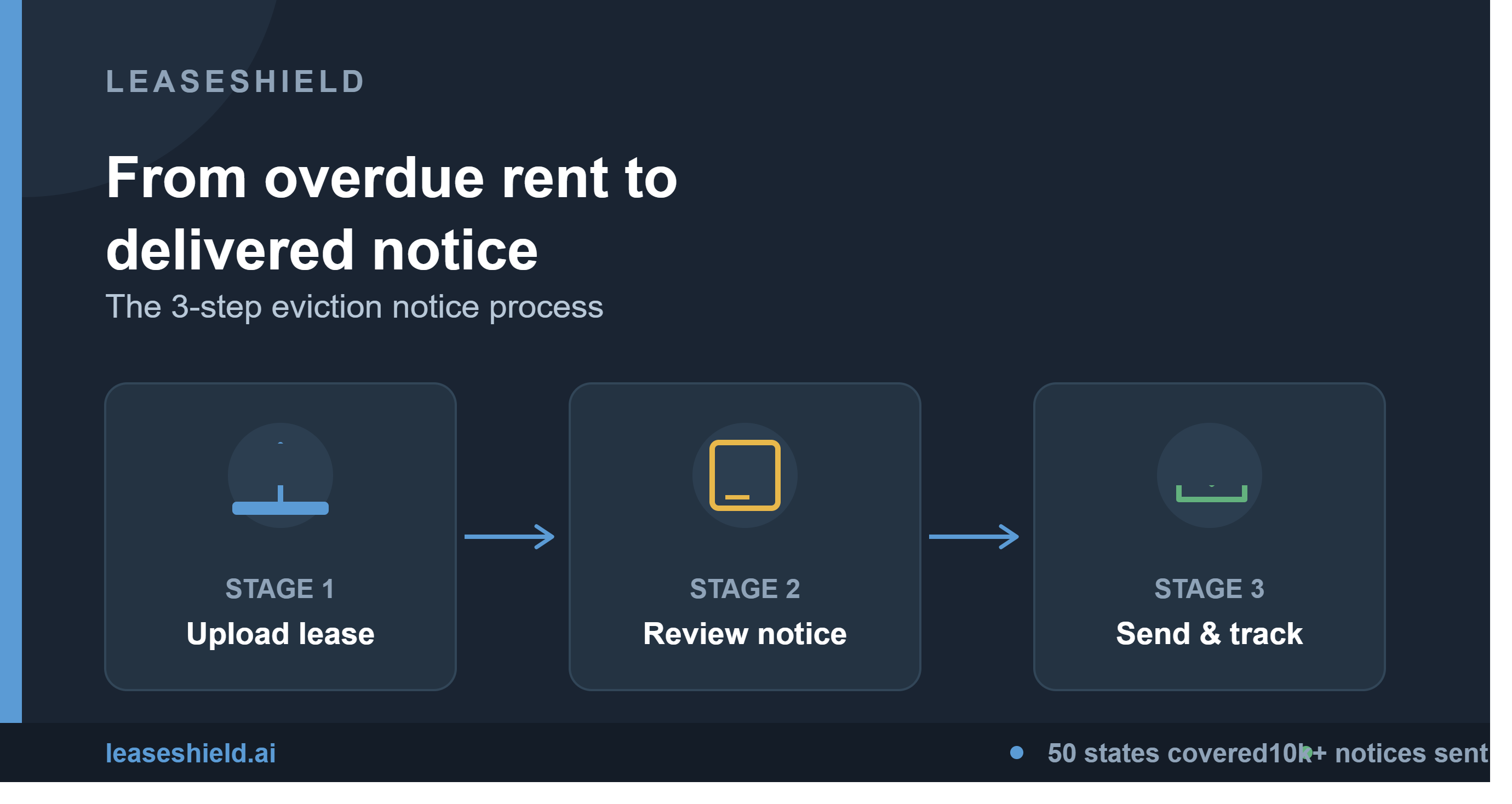
1. Upload your lease.
LeaseShield extracts the tenant name, property address, and other key details automatically — no retyping information you already have on file.
2. Get a state-specific notice.
Based on the property's location, LeaseShield generates the correct notice type and deadline automatically, whether that's a 3-Day Notice to Pay or Quit in Florida or a 14-Day Rent Demand in New York.
3. Review before you send.
Every notice is generated for your review — nothing goes out automatically. You confirm the details are correct before it's sent.
4. Send and track delivery.
Choose to download the notice, send it by certified email, or send it by certified mail through USPS. Either way, you get delivery tracking and proof of service, so you have a paper trail if the case goes to court.
LeaseShield supports all 50 states and works whether you manage one rental property or an entire portfolio. Property managers can generate notices in bulk across units, and attorneys can use it to move client cases along faster.
What Happens After the Notice Is Sent?
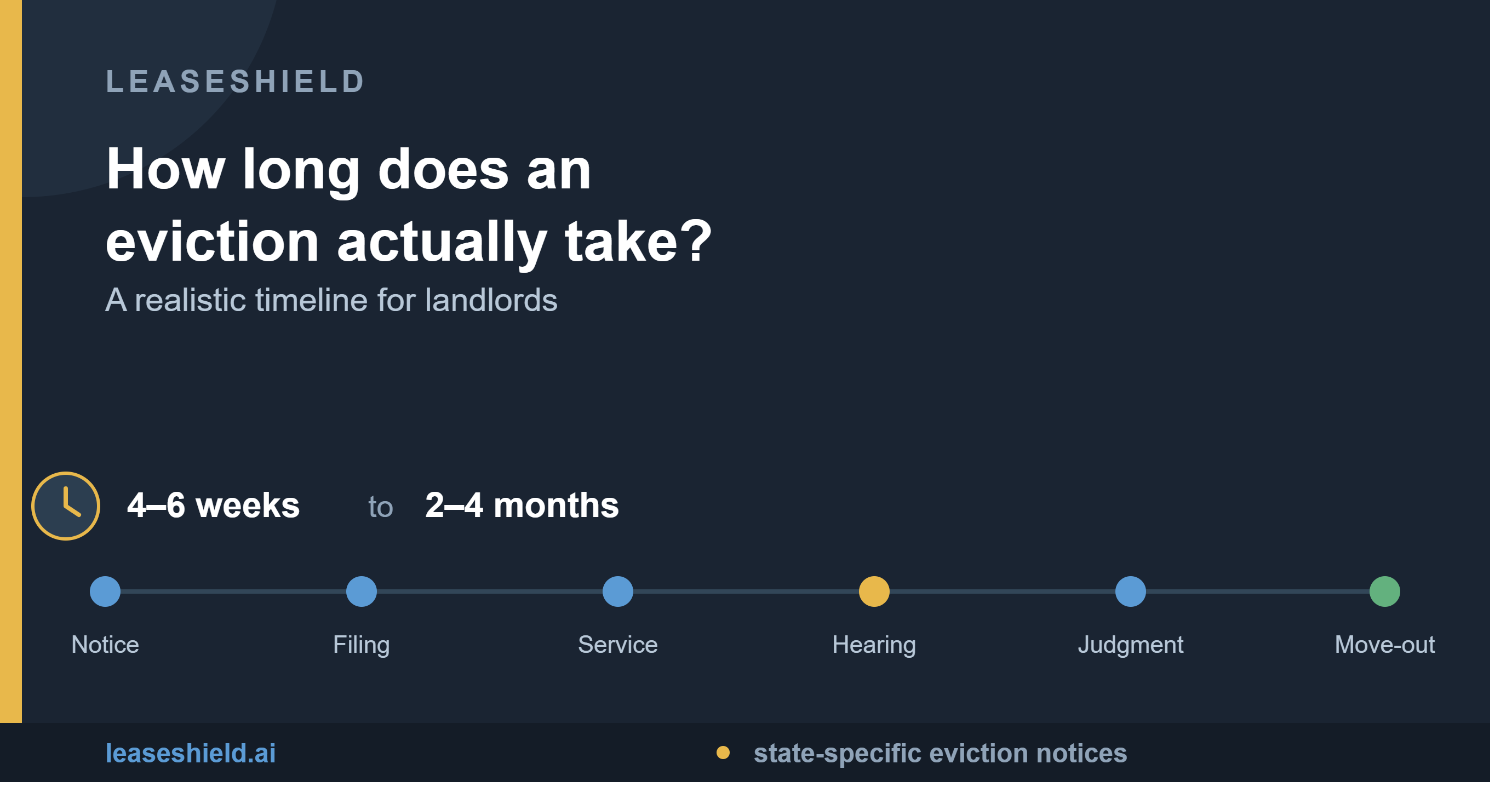
Once a tenant receives a notice, the clock starts on their state's response window. During that time they can pay overdue rent, fix the lease violation, or vacate. If they don't respond within the deadline, you can move forward with filing an eviction case in court — and LeaseShield keeps a record of when the notice was sent and delivered, which you'll want on hand for that filing.
A Quick Note
LeaseShield is a document preparation and delivery platform — not a law firm — and doesn't provide legal advice. Eviction laws and procedures vary by state and even by city, so it's always worth reviewing your notice and confirming your local requirements with a licensed attorney before filing, especially if your case is unusual or contested.
Ready to Send Your Notice?
If you're dealing with unpaid rent or a lease violation right now, don't let paperwork slow you down. Generate your state-specific eviction notice with LeaseShield in minutes, and track it all the way through delivery.